
Deployment walkthroughWeb development & ongoing maintenance
A farm catalogue the team can keep up to date.
I built and maintain Homestead Farm’s website, connecting its product catalogue to the Google Sheet the team uses to manage product information.
In briefTL;DR · 1 min read
- The team manages product information in Google Sheets; the website reads it into a browsable catalogue.
- Owner feedback led to changes in price units, product visibility and egg-size ordering.
- The work continues after launch: I maintain the site and check how the changes appear to customers.
Evidence checkpoint: September 10, 2026
My part. The website build and ongoing maintenance, direct conversations with the owner, and turning feedback into changes I check against the live catalogue.
AI assistance. I use AI coding tools heavily for implementation and debugging. I bring the client context, direct the work and review the result. The tools also help diagnose causes and prepare checks.
- 1
Product Sheet
The team maintains product information
- 2
Website data
Read product values and preserve their meaning
- 3
Customer catalogue
Browse products, prices and detail pages
Keep the useful part of the existing routine
The farm team already used a spreadsheet for product information. The website connects to that Sheet so maintaining the catalogue fits a tool they know.
I built the site with Next.js, TypeScript and AI coding tools. My work includes meeting with the owner, translating feedback into changes and following through after launch.
Technical lens
The server reads and normalizes Google Sheets product data, then supplies the catalogue and product pages. The deployed configuration uses a 900-second revalidation interval. That setting alone is not a guarantee that every edit appears within exactly 15 minutes.
The small details are part of the job
A price needs its unit. A product that should no longer be listed needs to disappear. Egg sizes need to appear in an order the team and its customers understand.
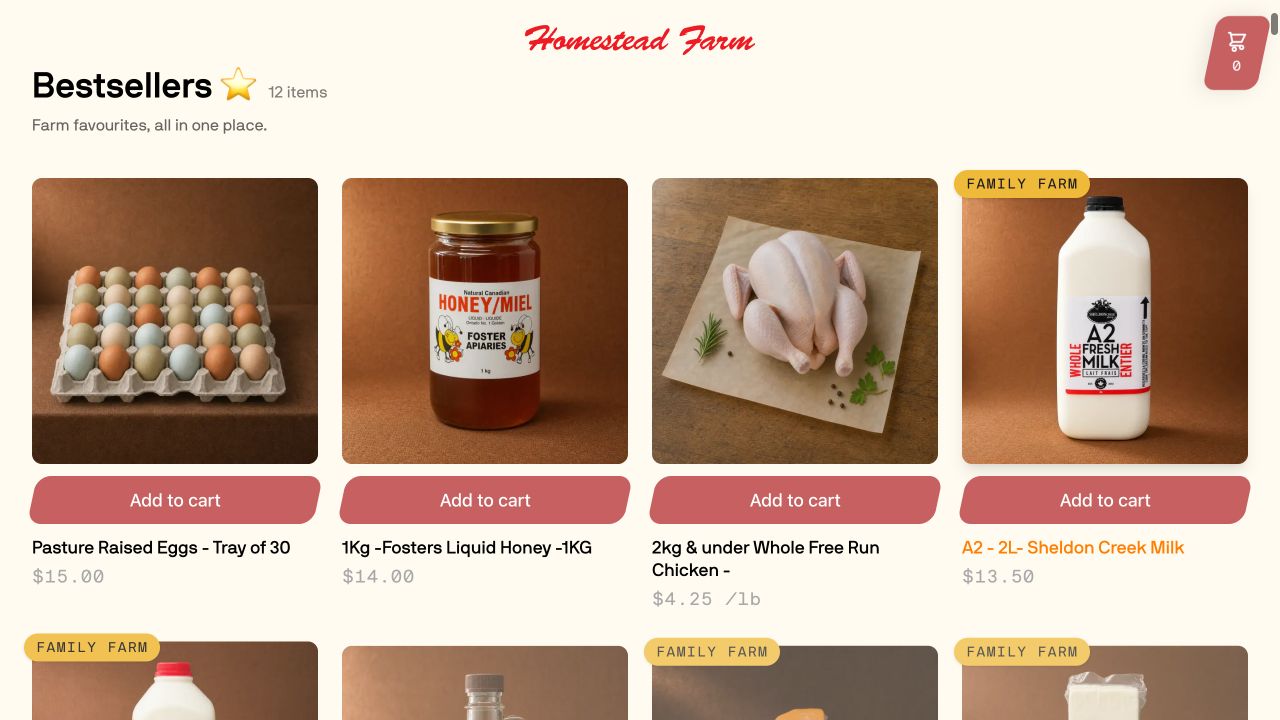
Feedback from the owner led to changes in those details. The site retains weight units, hides products without a positive price and orders the egg sizes. I check the resulting pages as part of maintaining the website.
Evidence at a glance
| Check | Recorded result |
|---|---|
| Public catalogue | Live shop and product pages inspected September 10 |
| Price meaning | Per-weight prices retain their units |
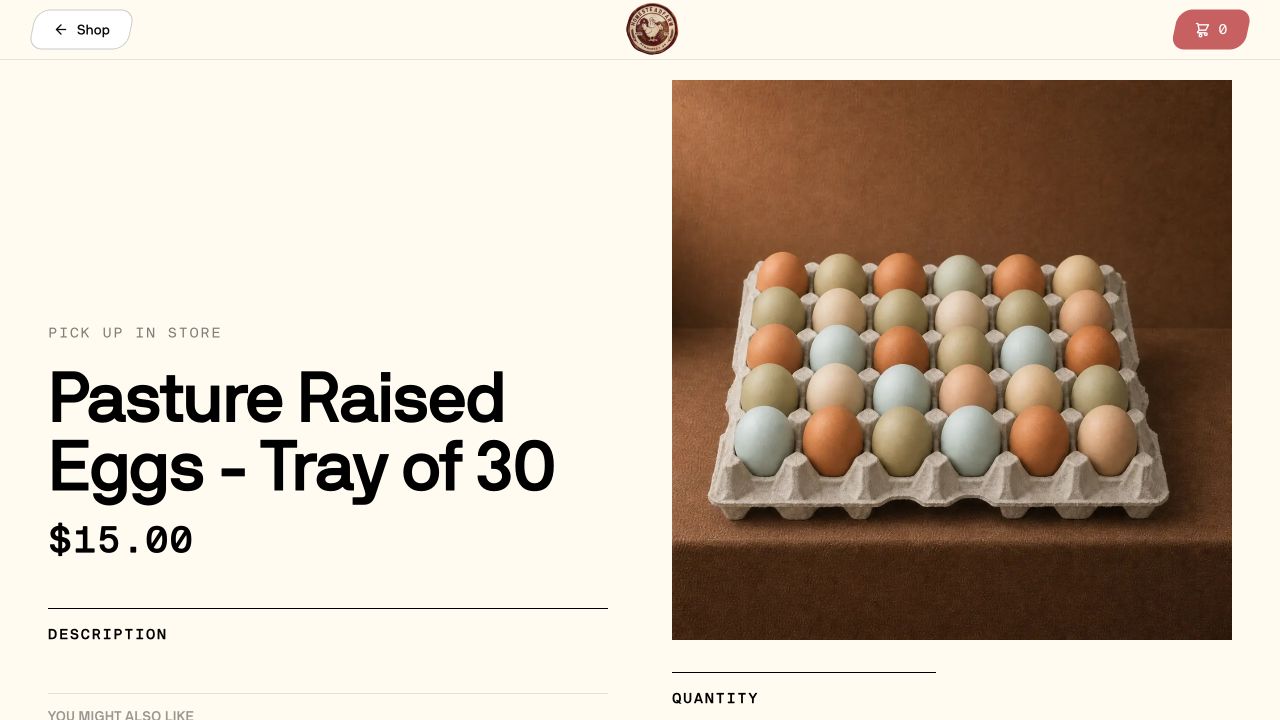
| Product continuity | The selected egg tray appears in both catalogue and detail view |
This account covers the public website and its maintenance. The wholesale operations trial is separate. Screenshots establish what was visible on the inspection date; they do not establish orders, revenue or growth.
What to take away
The useful test is whether the person maintaining the catalogue and the customer reading it can both make sense of it.
Discuss your workflow